The animated world rarely sees quiet revolutions—especially when a voice actor with a decade-long legacy drops a truth bomb on a franchise’s creative direction. Greg Cipes, the voice behind Beast Boy in Teen Titans Go!, hasn’t just voiced a character—he’s personified a generation’s connection to the Teen Titans. Now, his candid reflections on the show’s evolution and his role in it aren’t just behind-the-scenes chatter. They’ve poured gasoline on an already smoldering fanbase divide, reopening debates about artistic integrity, network interference, and what happens when a beloved team becomes a punchline.
This isn’t just about one actor or one character. It’s about the soul of a franchise that once stood for teamwork, heroism, and emotional resonance—now often reduced to meme fodder and slapstick skits. Cipes’ remarks didn’t start the fire, but they’ve undeniably restoked the flames.
The Beast Boy Voice: More Than Just a Gig
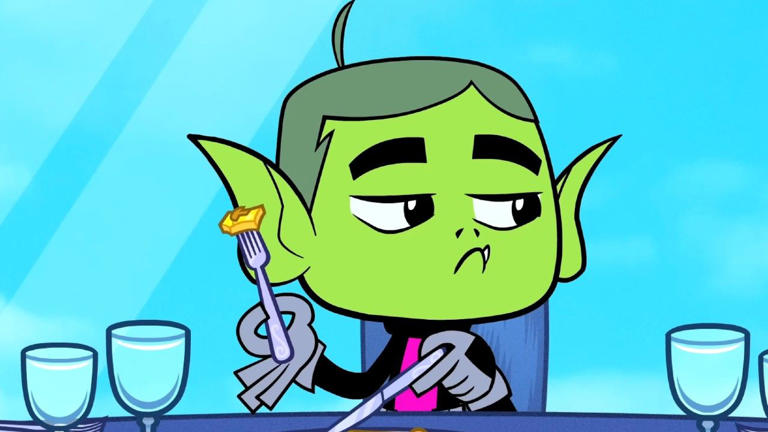
Greg Cipes didn’t just play Beast Boy—he became him. From the original Teen Titans (2003) to the comedic pivot of Teen Titans Go! (2013), Cipes’ vocal performance carried a distinctive blend of humor, vulnerability, and loyalty. His delivery made Beast Boy more than comic relief; he was the emotional glue in many episodes.
But when Teen Titans Go! debuted, tonal whiplash hit fans hard. The dark, dramatic arcs of the original were replaced with absurdism, musical numbers, and fourth-wall breaks. Beast Boy—once the team’s heart—was now often the butt of the joke.
Cipes, in multiple interviews and live panels, has acknowledged the shift. “We went from saving the world to saving the snack budget,” he once joked. Yet beneath the humor lies a deeper commentary: the discomfort of seeing a character you helped build reduced to a caricature.
Fans noticed. And when Cipes recently doubled down—suggesting that Teen Titans Go! was creatively stifling and that the original tone was more meaningful—he gave voice to what many had long felt.
Why This Matters: The Cartoon Network Identity Crisis
Cartoon Network isn’t just airing cartoons. It’s managing legacies. In the 2000s, CN was synonymous with bold, emotionally intelligent storytelling—Adventure Time, Regular Show, and Teen Titans didn’t just entertain; they resonated.
Then came the pivot. Budget cuts, algorithm-driven content, and YouTube competition led to shorter episodes, faster jokes, and broader appeal. Teen Titans Go! became a ratings juggernaut—but at the cost of depth.
Cipes’ comments strike at this tension: - Was the shift necessary for survival? - Did fans lose something irreplaceable in the process? - And why does a voice actor’s honesty still feel like a scandal?
The answer lies in ownership. Fans don’t just consume these shows—they grow up with them. When someone like Cipes, embedded in the series for over 20 years, questions the direction, it’s not gossip. It’s a referendum on legacy.
Behind the Mic: Cipes’ Career Beyond Beast Boy

It’s easy to reduce Greg Cipes to one role. But his career spans decades and genres. From Ben 10 to Transformers: Prime, Cipes has been a consistent presence in animation. He’s also a musician, fitness advocate, and vocal mental health supporter—often weaving personal values into his work.
This versatility makes his critique of Teen Titans Go! more poignant. He’s not a disgruntled employee—he’s a creative who still cares. In a 2023 podcast appearance, he said: > “I love making kids laugh. But I also remember kids who told me the original Titans helped them through depression. That matters more than a viral sketch.”
That duality—entertainer vs. emotional anchor—explains why his words carry weight. He’s not rejecting comedy; he’s calling for balance.
Fan Reactions: Divide, Defensiveness, and Nostalgia
The response to Cipes’ comments has been anything but unified. Social media split along generational and tonal lines.
Older fans (18–35): - Celebrate his honesty - Share edits comparing serious original episodes with TTG’s silliness - Use hashtags like #BringBackRealTitans
Younger viewers (under 14): - Defend TTG as “fun and light” - Argue the original was “too sad” or “boring” - Flood YouTube comments with memes
But beneath the noise, a pattern emerges: the deeper the emotional investment, the stronger the reaction. Parents who watched the original series now show it to their kids—and are baffled by the disconnect.
One Reddit thread, with over 15,000 upvotes, captures it: > “My son loves Beast Boy in TTG. But when I showed him the episode where Beast Boy nearly dies in ‘The Beast Within,’ he was silent for 10 minutes. That’s the power we walked away from.”
Cipes didn’t create this divide. He simply named it.
Cartoon Network’s Silence: A Strategy or a Blind Spot?
What’s telling is CN’s response—specifically, the lack of one. No official statement. No social media rebuttal. No behind-the-scenes feature to contextualize the shift.
This silence speaks volumes. Networks often avoid validating actor critiques to prevent franchise instability. But in the digital age, silence fuels speculation. Fans interpret it as confirmation: yes, TTG is a cash cow; no, creative fulfillment isn’t the priority.
Compare this to Disney’s handling of Phineas and Ferb’s revival—celebrating legacy while embracing new humor. Or Netflix’s Avatar: The Last Airbender sequel, which consulted original creators. CN’s approach feels transactional, not relational.
And when a voice actor like Cipes—who attends cons, engages fans, and promotes the brand—feels compelled to speak out, it suggests internal tensions aren’t just artistic. They’re cultural.
The Bigger Picture: What Happens to Animated Legacies?
Cipes’ remarks aren’t isolated. They mirror broader industry concerns: - Reboots that erase emotional stakes - Voice actors undervalued despite fan loyalty - Networks prioritizing virality over storytelling
Consider other cases: - Tara Strong on The Fairly OddParents revival (“It didn’t feel like ours”) - Tom Kenny admitting SpongeBob went “too far” with memes - The DuckTales 2017 team fighting to preserve depth amid toy-driven plots
These aren’t tantrums. They’re pattern recognitions. And when actors like Cipes speak up, they’re advocating for something bigger: respect for the craft, and the audience.

Teen Titans Go! isn’t “bad.” For what it is—fast, silly, accessible—it works. But it’s not the only version that should exist. The original Teen Titans proved animated series could tackle trauma, identity, and morality. Losing that balance diminishes the medium.
Can There Be a Middle Ground?
Yes—but it requires intention. Here’s how CN could respond without alienating either fanbase:
- Launch a parallel series – A “Titans: Legacy” miniseries for older fans, exploring where the characters are now.
- Bring back dramatic arcs in TTG – Even comedy shows can have heart (see The Grim Adventures of Billy & Mandy).
- Amplify voice actor input – Let Cipes and others shape narrative direction, not just read lines.
- Celebrate the original – Re-air key episodes with creator commentary. Host retrospectives.
- Acknowledge the divide – A public statement recognizing both versions’ value could go a long way.
Fans don’t need one show canceled to validate the other. They need coexistence.
What This Means for the Future of Animation
The Beast Boy actor controversy isn’t about one man or one show. It’s a symptom of a larger shift: audiences are no longer passive. They demand authenticity, continuity, and emotional payoff.
Networks that treat cartoons as disposable content will lose ground. Those that honor legacy while innovating—like Invincible on Amazon or Arcane on Netflix—set the new standard.
For Teen Titans, the path forward isn’t erasing TTG. It’s expanding the universe. Bring back dramatic storytelling under a new banner. Let Greg Cipes play Beast Boy as a mentor, a leader, a grown-up hero. Prove that evolution doesn’t mean abandonment.
Closing: Speak Up, But Keep Creating
Greg Cipes didn’t betray Teen Titans Go! by speaking honestly. He honored it. Criticism from within is often the deepest form of care.
Fans, creators, and networks all have roles to play: - Fans: Keep engaging—thoughtfully. Demand better without dismissing joy. - Actors: Continue using your platform to advocate for meaningful work. - Networks: Listen. Not to cancel shows, but to expand possibilities.
The fire is lit. Now let it illuminate, not destroy.
FAQ
Why did Greg Cipes criticize Teen Titans Go!? He didn’t reject the show outright but expressed concern that its comedic shift lost the emotional depth that made the original resonate with fans.
Is Beast Boy getting recast in Teen Titans Go!? No—Greg Cipes remains the voice of Beast Boy as of the latest episodes.
Did Cartoon Network respond to the controversy? No official statement has been released by Cartoon Network.
Is Teen Titans Go! ending? There’s no confirmation of cancellation. The show continues to air new episodes.
What’s the difference between Teen Titans and Teen Titans Go!? The original Teen Titans (2003) focused on action and drama, while Teen Titans Go! (2013) is a comedy-driven, often absurdist reimagining.
Can both versions of Teen Titans coexist? Yes—many fans want a serious series to run parallel to the comedic TTG, respecting both tones.
Where can I watch the original Teen Titans series? It’s available on HBO Max, Amazon Prime, and for purchase on digital platforms like iTunes and Google Play.
FAQ
What should you look for in Beast Boy Actor Reignites Cartoon Network Drama? Focus on relevance, practical value, and how well the solution matches real user intent.
Is Beast Boy Actor Reignites Cartoon Network Drama suitable for beginners? That depends on the workflow, but a clear step-by-step approach usually makes it easier to start.
How do you compare options around Beast Boy Actor Reignites Cartoon Network Drama? Compare features, trust signals, limitations, pricing, and ease of implementation.
What mistakes should you avoid? Avoid generic choices, weak validation, and decisions based only on marketing claims.
What is the next best step? Shortlist the most relevant options, validate them quickly, and refine from real-world results.