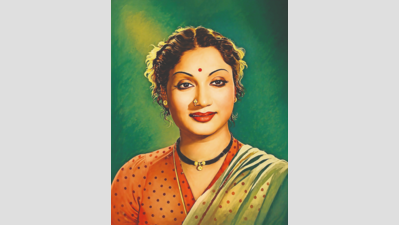
G Varalakshmi didn’t just act—she stormed the screen. In an era when female roles were confined to demure housewives or tragic lovers, she arrived with a swagger, a sharp tongue, and a presence that refused to be tamed. Dubbed the “rowdy actress,” G Varalakshmi wasn’t merely playing characters on the edge—she lived on the edge, both on and off the camera. Her defiance of cinematic and societal conventions made her a controversial figure, yet an undeniable force in South Indian cinema during the mid-20th century.
She didn’t fit the mold. And that’s precisely why she mattered.
The Making of a Rebel: Early Life and Entry into Cinema
Born in 1925 in Andhra Pradesh, G Varalakshmi’s journey to the silver screen was anything but conventional. Unlike many of her contemporaries who came from theatrical families or affluent backgrounds, she carved her path through sheer audacity. She began her career in theater, performing in Tamil and Telugu dramas during a time when stage actresses were often stigmatized.
Her bold stage presence caught the eye of early Telugu filmmakers. By the 1940s, she made her cinematic debut, but not as a shy ingenue. She entered the film world already armed with confidence, irony, and a voice that could command silence in a crowded room.
Her early roles weren’t romantic leads. They were fiery, complex women—widows who refused pity, working-class heroines with sharp tongues, and characters unafraid to challenge male authority. At a time when Indian cinema was still negotiating the boundaries of female respectability, G Varalakshmi played women who didn’t care for approval.
“I never wanted to be the ‘good girl’ the audience could pity. I wanted them to fear me, respect me—or at least never forget me.” — G Varalakshmi, in a rare 1970s interview.
Redefining Femininity in South Indian Cinema
G Varalakshmi’s performances rejected the duality of “pure” versus “fallen” women that dominated Indian narratives. Instead, she portrayed characters with agency, even when they operated on the fringes of society. She wasn’t the virgin or the courtesan—she was the widow who opened a bar, the sister who fought landlords, the woman who walked out on her husband without apology.
In Pelli Chesi Choodu (1952), she played Seeta, a progressive woman advocating for love marriage and women’s education. While the film had a comedic tone, her character carried revolutionary undertones. She wasn’t just supporting the male lead—she was driving a social message with unflinching confidence.
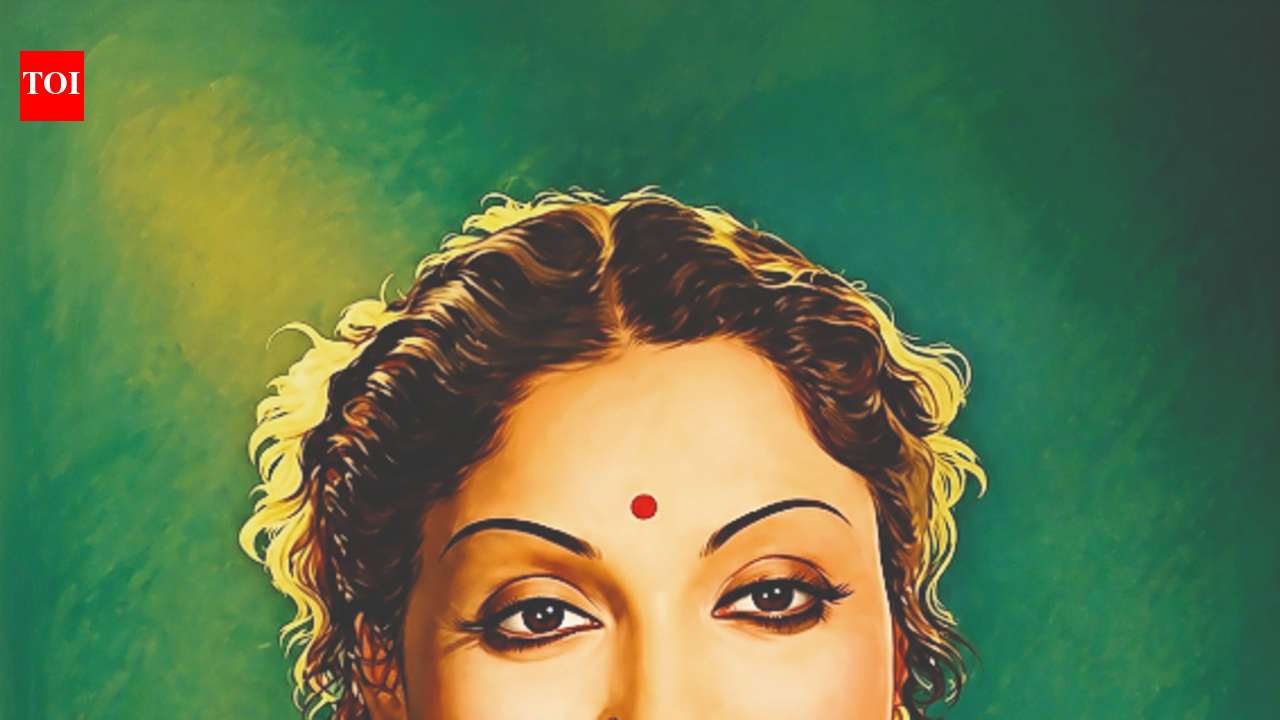
Later, in Panduranga Mahatyam (1957), she took on a mythological role, but still infused it with her trademark defiance. Her portrayal of Rukmini wasn't passive devotion—it was strategic, willful, and layered with emotional intelligence.
She didn’t just play strong women—she redefined what strength looked like in South Indian cinema: not through silence or suffering, but through speech, action, and independence.
The “Rowdy” Persona: On-Screen and Off
The label “rowdy actress” didn’t originate from her roles alone—it stemmed from her real-life persona. G Varalakshmi was known for her outspoken nature, her refusal to follow studio hierarchies, and her willingness to publicly criticize patriarchal norms in the industry.
She clashed with directors who wanted her to tone down her performances. She walked off sets when scripts reduced women to decorative roles. She gave interviews where she mocked the idea of “ideal womanhood” as portrayed in films.
This wasn’t mere publicity stunts. It was ideology in action. While other actresses cultivated a soft, approachable image, G Varalakshmi leaned into controversy. She smoked in public, spoke candidly about her relationships, and lived independently—a rarity in 1950s India.
The media painted her as scandalous. The public debated her morality. But audiences kept watching. Why? Because she felt real.
“The rowdy actress? Yes, I’ll take that. Better than being the silent one who dies at the end.”
Breaking Barriers in a Male-Dominated Industry
G Varalakshmi didn’t wait for permission to lead. In a time when heroines were lucky to have dialogues beyond three lines, she negotiated for meatier roles, co-production credits, and even script input.
She wasn’t just an actress—she was a producer and screenwriter later in her career. In 1961, she co-produced Chilaka Gorinka, a film centered entirely on female friendship and economic independence—an unprecedented theme for its time.
Her approach to filmmaking was pragmatic. She understood that visibility wasn’t enough—control over narratives was essential. She fought for:
- Equal screen time with male leads
- Scripts that gave women moral complexity
- On-set authority over costume and dialogue
- Fair pay, often demanding salaries comparable to leading men
These weren’t just personal demands—they set precedents. Young actresses began citing her as a model of professional autonomy.
Notable Films and Cultural Impact
G Varalakshmi’s filmography spans over 50 films across Telugu, Tamil, and Kannada cinema. While not all were commercial hits, many became cultural reference points for their bold themes.
.jpg)
| Film | Year | Role Significance |
|---|---|---|
| Pelli Chesi Choodu | 1952 | Advocated inter-caste marriage and women's choice |
| Panduranga Mahatyam | 1957 | Reinterpreted mythological femininity with agency |
| Chilaka Gorinka | 1961 | Explored female solidarity and economic independence |
| Jagadeka Veeruni Katha | 1961 | Played a warrior queen with political ambition |
| Gulebakavali | 1955 | Subverted the damsel-in-distress trope |
What made these roles resonate wasn’t just their content—but the way G Varalakshmi inhabited them. She delivered dialogues with a piercing clarity, her eyes often conveying what the script couldn’t say. Directors noted that she required fewer retakes because her emotional calibration was precise.
Today, filmmakers like Vetrimaaran and Leena Manimekalai cite her as an influence—not for her style, but for her courage to exist outside the frame of acceptability.
The Legacy of Defiance
G Varalakshmi’s later years were marked by relative obscurity. As new waves of cinema emerged, her brand of rebellion faded from mainstream memory. Yet, her influence lingered in the margins.
Modern actresses who play fierce, unconventional women—from Tabu to Sai Pallavi—carry traces of her legacy. The rise of female-led narratives in Telugu and Tamil cinema owes a quiet debt to the doors she kicked open.
Her life reminds us that progress in representation isn’t always linear. Some pioneers are celebrated in their time; others are remembered in hindsight. G Varalakshmi was ahead of hers.
She wasn’t just defying convention—she was rewriting the rules of who could be a heroine, what a heroine could say, and how she could live.
Why G Varalakshmi Still Matters
Today, as conversations about gender, representation, and agency dominate Indian cinema, revisiting G Varalakshmi’s career isn’t nostalgia—it’s necessity.
She offers a blueprint for:
- Authentic representation – Playing women who are flawed, angry, smart, and sexual without apology.
- Creative control – The importance of women not just acting in stories but shaping them.
- Public defiance – Using visibility to challenge norms, even at personal cost.
Her career warns against mistaking visibility for empowerment. She was visible, yes—but she demanded power. And when it wasn’t given, she took it.
For filmmakers aiming to create bold female characters, studying her filmography isn’t optional. It’s research.
Final Word: Steal the Show, Then Change It
G Varalakshmi didn’t just steal the show—she changed what the show could be. In an industry that still struggles with gender equity, her life stands as a masterclass in resistance through art.
Want to make an impact? Don’t wait for permission. Write your own lines. Claim your screen time. Be unapologetically disruptive. That’s how legends are made.
Action step: Watch Pelli Chesi Choodu or Chilaka Gorinka with an eye not just for plot, but for how G Varalakshmi uses posture, silence, and dialogue to assert dominance in every scene. Study the craft of defiance.
Frequently Asked Questions
Who was G Varalakshmi? G Varalakshmi was a pioneering Telugu and Tamil actress known for her bold, unconventional roles in mid-20th century South Indian cinema. She was celebrated for breaking gender norms both on-screen and off.
Why was she called the “rowdy actress”? The term reflected her rebellious screen persona and real-life defiance of societal expectations, including her outspoken nature, independent lifestyle, and refusal to conform to traditional feminine roles.
What are some of G Varalakshmi’s most famous films? Notable films include Pelli Chesi Choodu, Panduranga Mahatyam, Chilaka Gorinka, Jagadeka Veeruni Katha, and Gulebakavali.
Did G Varalakshmi work behind the camera? Yes, she co-produced Chilaka Gorinka and contributed to script development, advocating for stories centered on women’s independence and solidarity.
How did she influence modern Indian cinema? She paved the way for complex female characters and inspired later generations of actresses and filmmakers to pursue roles and narratives that challenge patriarchal norms.
Was G Varalakshmi controversial in her time? Yes, her lifestyle and roles often sparked public debate, with critics labeling her as “unladylike,” while supporters praised her for authenticity and courage.
Where can I watch her films today? Some of her works are available through regional film archives, YouTube channels specializing in classic South Indian cinema, or DVD collections from production houses like Vauhini Studios.
FAQ
What should you look for in G Varalakshmi: The Rowdy Actress Who Defied Convention? Focus on relevance, practical value, and how well the solution matches real user intent.
Is G Varalakshmi: The Rowdy Actress Who Defied Convention suitable for beginners? That depends on the workflow, but a clear step-by-step approach usually makes it easier to start.
How do you compare options around G Varalakshmi: The Rowdy Actress Who Defied Convention? Compare features, trust signals, limitations, pricing, and ease of implementation.
What mistakes should you avoid? Avoid generic choices, weak validation, and decisions based only on marketing claims.
What is the next best step? Shortlist the most relevant options, validate them quickly, and refine from real-world results.