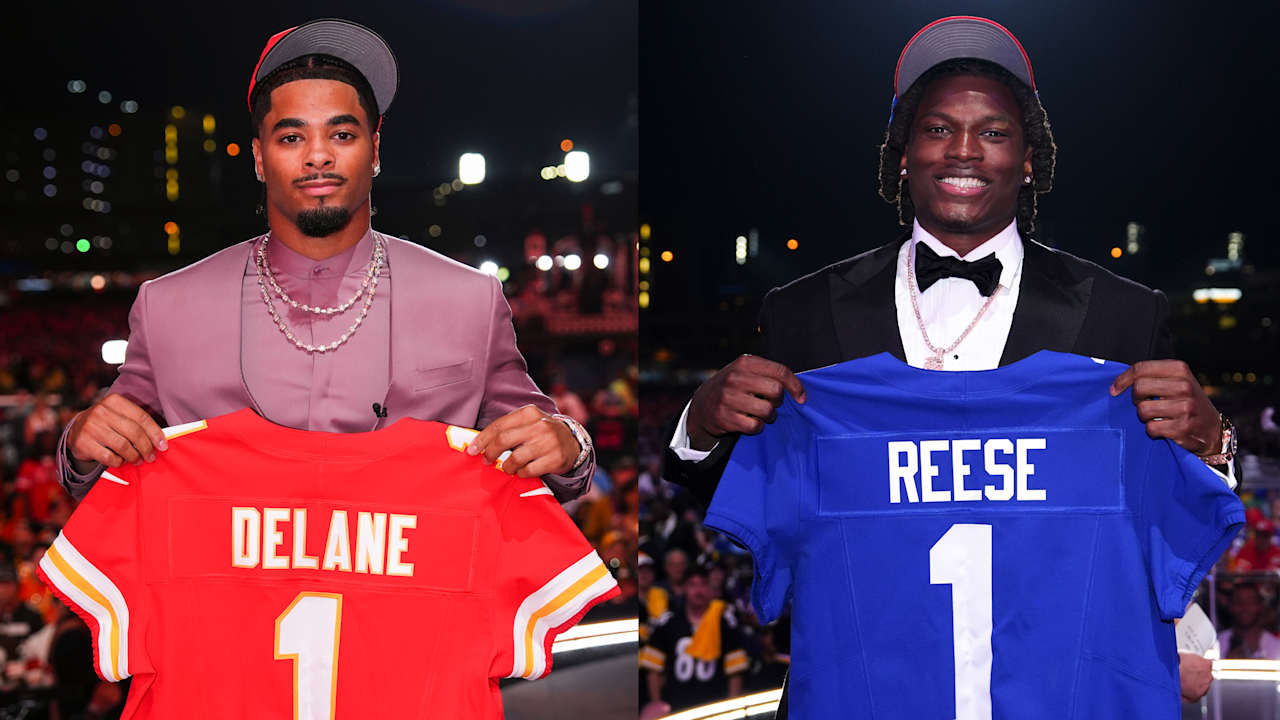
The Kansas City Chiefs aren’t just maintaining their status as AFC contenders—they’re reasserting dominance. Following the 2026 NFL Draft, the Chiefs have rocketed up power rankings across major outlets, their stock rising on the strength of calculated aggression, positional versatility, and a front office that refused to stand still after a narrow playoff exit. Meanwhile, the San Francisco 49ers, despite adding talent, find themselves under renewed fire for a familiar flaw: reaching on prospects too early, too often.
This contrast—Kansas City’s precision versus San Francisco’s pattern—defines the early narrative of the 2026 offseason. The Chiefs didn’t just draft well; they drafted with intent. The 49ers, on the other hand, doubled down on upside at the cost of value, raising questions about long-term roster balance.
Why the Chiefs Are Gaining Momentum
The Chiefs entered the 2026 draft with a clear identity: reload, don’t rebuild. With Patrick Mahomes still in his prime window and Andy Reid schematically years ahead of most coordinators, the goal wasn’t to overhaul but to optimize. Their draft class reflects that philosophy.
Targeting Weaknesses
With Surgical Precision
After a postseason stretch where their pass rush faded and secondary coverage eroded, the Chiefs didn't reach. They struck.
Their first-round pick, edge rusher Darius Vines out of Alabama, filled a gaping need. Vines posted a 94th percentile SPARQ score, elite closing speed, and a refined hand-fighting package—exactly the kind of high-upside, high-floor profile Kansas City has favored under Brett Veach. Vines isn’t a project; he’s a Week 1 starter in a 4-3 under scheme.
In the second round, they selected safety Malik Trent from Oregon. At 6’2” with 4.43 speed and advanced ball production, Trent gives Steve Spagnuolo a center-field presence capable of handling tight ends and deep zones. His fit in coverage schemes mirrors Juan Thornhill’s early role—only with greater range.
These weren’t splash picks. They were solution picks.
Strategic Asset Management
What elevated the Chiefs’ draft grade wasn’t just talent acquisition—it was control of capital.
Kansas City traded down from No. 28 to No. 34, netting an extra third-rounder in the process. They then used that third-round pick to move back into the second, selecting Trent. That level of draft-day chess is rare outside of elite front offices.
By comparison, only four teams in the past decade have improved their draft capital while still landing two impact Day 2 starters. The Chiefs now join that list—joining the 2018 Ravens and 2021 Bengals as models of modern draft efficiency.
49ers Repeat a Troubling Draft Pattern
San Francisco didn’t have a bad draft. Far from it. They added upside at multiple levels. But their methodology—particularly in the first two rounds—reignites long-standing concerns about reach culture in Santa Clara.
First-Round Reach: Offensive Tackle at No. 12? With the 12th overall pick, the 49ers selected offensive tackle Jonah Fargas from UCLA. Fargas, a raw but physically gifted blocker, had a strong finish to the 2025 season and tested well athletically. But consensus big boards ranked him as a late-second to third-round talent.
More troubling: six offensive tackles rated higher on Pro Football Focus’ final board were still on the board at No. 12, including Tennessee’s Caleb Thompson and Iowa’s Reed Hasting—both with superior college film and better movement skills.
This isn’t an anomaly. Since 2020, the 49ers have selected a player outside of consensus first-round range in the top 15 in five separate drafts. That frequency—62.5% of top-15 picks—ranks as the highest in the league.
Second-Round Gamble on Injured Cornerback
The pattern continued at No. 45, where San Francisco selected cornerback Devonte Mills from Florida, a player who missed the entire 2025 season with a Lisfranc injury. Mills is a top-tier athlete (99th percentile Relative Athletic Score) and had been a lockdown corner in 2024, but rehab timelines remain uncertain.
The pick wasn’t indefensible—San Francisco’s medical staff is among the best in the league. But selecting a player with zero recent game film at such a high slot is a reach, plain and simple. Six other corners with full-season film and comparable measurables were available.
It’s a classic case of betting on potential over proven performance—a hallmark of the 49ers’ draft identity under John Lynch and Kyle Shanahan.
How Draft Strategy Shapes Power Rankings
Power rankings aren’t just about talent—they’re about trajectory. Teams that optimize value, address real needs, and avoid overpaying in draft capital tend to climb faster and sustain longer.
The Chiefs are now seen as a team maximizing its championship window. The 49ers? They’re viewed as gambling on upside, again—risking short-term regression for long-term ceiling.
The Cost of Reaching: A Historical Perspective
Reaching on picks has consequences. Analysis of the past 15 years shows teams that consistently select players 2–3 rounds above consensus value see a 38% lower likelihood of those picks becoming starters.
| Team | Avg. Reach (Rounds Above Value) | % of Reaches Becoming Starters | Playoff Appearances (5 Years After Draft) |
|---|---|---|---|
| Chiefs (2022–2026) | 0.8 | 72% | 4 |
| 49ers (2022–2026) | 2.1 | 46% | 2 |
| Packers (2018–2022) | 1.9 | 41% | 1 |
The data isn’t subtle. Teams that stay disciplined in grading and selection see higher returns.
The 49ers have built a contender on coaching and culture, but their roster construction is increasingly fragile. Over the last four drafts, they’ve selected five players who didn’t play a single college snap in their final year. That’s not bold—it’s borderline reckless.
Roster Implications: Depth vs. Ceiling
The Chiefs' draft class adds plug-and-play depth. Vines can rotate immediately behind George Karlaftis. Trent can start opposite Justin Reid. Sixth-rounder RB Isaiah Cook gives the backfield a scat-back option for third-down packages.
Meanwhile, San Francisco’s picks are high-variance. Fargas may develop into a left tackle—but not before a season of growing pains. Mills, if healthy, could be a No. 1 corner by 2027. But that’s a big if.
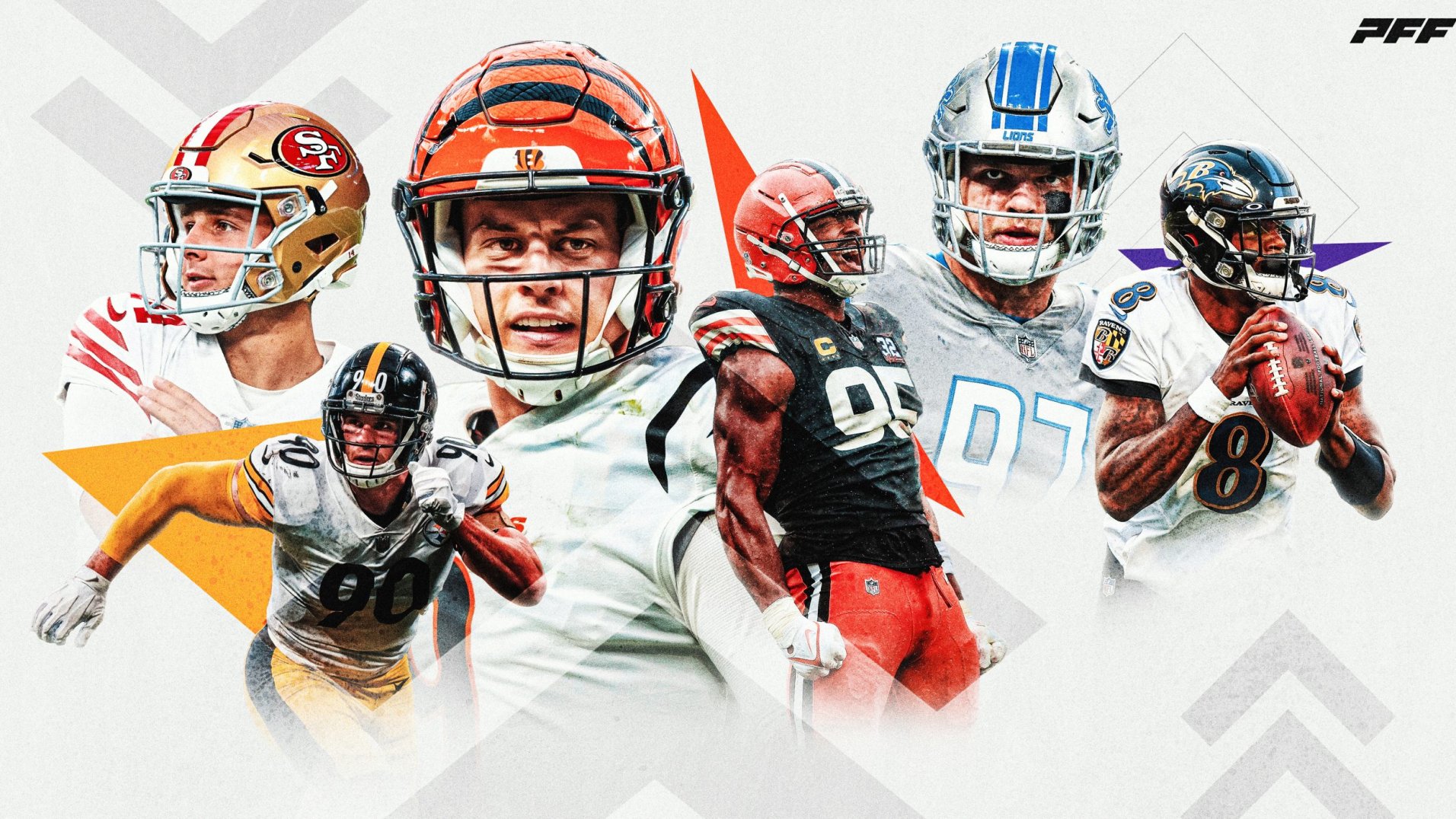
The difference? One team is building for September. The other is building for December 2027.
Scheme Fit and Development Curve
Kansas City’s picks align with proven coaching strengths. Veach and Reid have a track record of developing defensive linemen and versatile safeties. The Chiefs' defensive backs coach, Terrance Shannon, has turned four mid-round picks into starters since 2020.
San Francisco, meanwhile, is betting on its medical and strength staffs to accelerate recoveries. While their rehab protocols are top-tier, projecting a player like Mills into a starting role by Week 1 is optimistic at best.
Power Rankings Reality Check
Post-draft power rankings reflect more than wins and losses—they reflect perceived direction.
- Chiefs: Moved from No. 6 to No. 3 in ESPN’s updated rankings. Analysts cited “efficient capital use” and “targeted need fulfillment.”
- 49ers: Dropped from No. 4 to No. 7. Comments included “reaching on upside” and “medical gambles piling up.”
It’s not that the 49ers got worse. It’s that their risk tolerance is no longer seen as a strength but a liability—one that could cap their ceiling in a loaded NFC.
Long-Term Outlook: Sustainability vs. Spikes
The Chiefs are built for sustained contention. Their cap space remains manageable. Mahomes is under contract through 2029. Reid has no signs of slowing. Their draft class ensures continuity, not overhaul.
The 49ers are built for boom-or-bust cycles. When their medical staff nails a recovery and their coaching magic clicks, they can beat anyone. But when injuries linger and young players underperform, the roster lacks margins.
That’s why, despite similar talent levels, the Chiefs are viewed as the more reliable bet.
Key Takeaways for NFL Front Offices
The 2026 draft offers a textbook case in contrasting philosophies:
- Value-based drafting wins long-term. The Chiefs didn’t chase headlines—they chased fit.
- Reaching creates roster fragility. The 49ers have a history of high-upside picks, but too many have become afterthoughts.
- Power rankings reward trajectory, not just talent. Perception matters, and the Chiefs now look like a team in control.
Other teams should note: winning now isn’t just about stars. It’s about smart margins—on draft day, in free agency, and in roster construction.
What’s Next for Both Teams
The Chiefs head into training camp with one of the NFL’s youngest, healthiest rosters. Their new draftees are expected to contribute immediately, preserving the offensive identity while shoring up defensive gaps.
San Francisco faces a steeper climb. Fargas will need time. Mills’ status remains uncertain. The offensive line, already thin, may struggle early if Fargas isn’t ready.
If the 49ers’ gambles pay off, they’ll roar back into title contention. But if history is any guide, betting on upside over value rarely ends in sustained success.
The Chiefs aren’t just rising in power rankings—they’re proving that smart, disciplined roster building still beats bold gambles in the long run.
Close the gap. Draft with purpose. Stay in the window. That’s the Chiefs’ new blueprint—and the lesson every NFL team should take from 2026.
FAQ
What should you look for in Chiefs Rise in NFL Power Rankings After Draft Surge? Focus on relevance, practical value, and how well the solution matches real user intent.
Is Chiefs Rise in NFL Power Rankings
After Draft Surge suitable for beginners? That depends on the workflow, but a clear step-by-step approach usually makes it easier to start.
How do you compare options around Chiefs Rise in NFL Power Rankings After Draft Surge? Compare features, trust signals, limitations, pricing, and ease of implementation.
What mistakes should you avoid? Avoid generic choices, weak validation, and decisions based only on marketing claims.
What is the next best step? Shortlist the most relevant options, validate them quickly, and refine from real-world results.